FROM
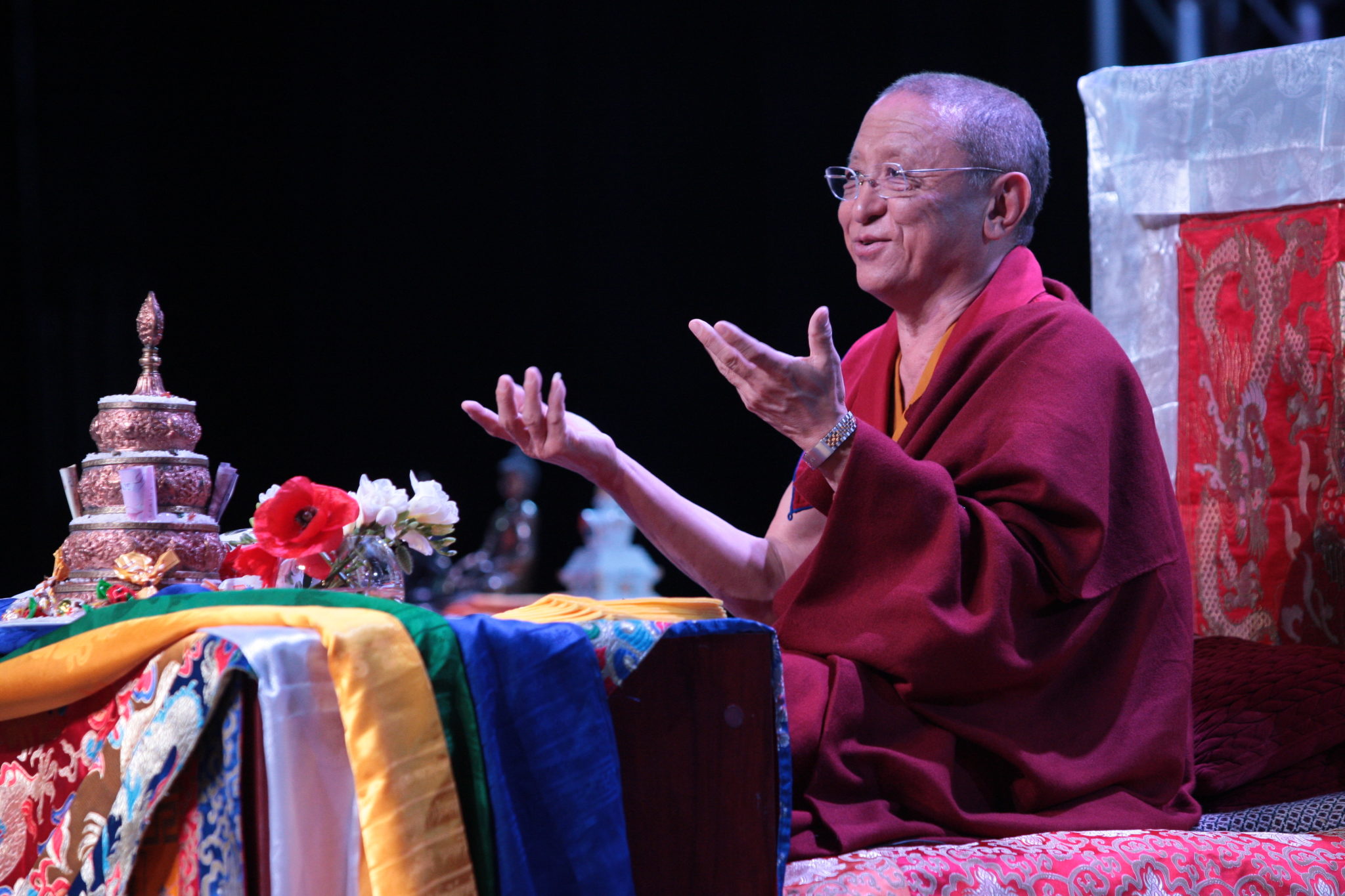
Chokyi Nyima Rinpoche public teaching in Kyiv 11-12 of June 2016, Day 1, Session 1
https://www.youtube.com/watch?v=S6DzRDPJlJg&list=PLCtG-FAtK1heNuDEdPyp53xoVEpfafxaE Welcome, everyone. There are many beings in this world. We, human beings, are interested in studying: getting to know different types or fields of knowledge and their purposes. It serves its function to become successful in life. It helps our prosperity, our wealth and achieving a certain status in society. So this is why we usually tend to become educated and study different subjects. This has become widely spread in the world. The other things that we can study and learn are the traditions and so-called religions. There are many types of religions. The common point in all of them is that they teach how to help others, do good things, cultivate virtues, be free from negativity, negative emotions and so on. So this is what is common about all the religions, what they preach, what is being practiced or experienced. Buddhism is a religion in its definite, pure tradition, but it is slightly different. How is it different? It is different in a sense that it wants us to investigate, even the words of the Buddha, to examine all things, all the phenomena: starting from the phenomena of form to the phenomena of the Omniscience. Buddha wants us to discover what the truth really is. According to the tradition, there are two types of truths. One is the conventional truth, and the other is the ultimate truth. Conventional truth refers to how things seem to be, how they appear. But this is not the only truth. The actual truth - or the ultimate truth, is which shows how the phenomena really are, its actual nature. So in Buddhism what distinguishes between two types of truths, or the sixteen aspects of four noble truths, is the studying of them, reflection, investigation of the words of the Buddha. After one …