
“The Four Mind Changing” can sound like introductory Dharma, yet their relevance never fades.
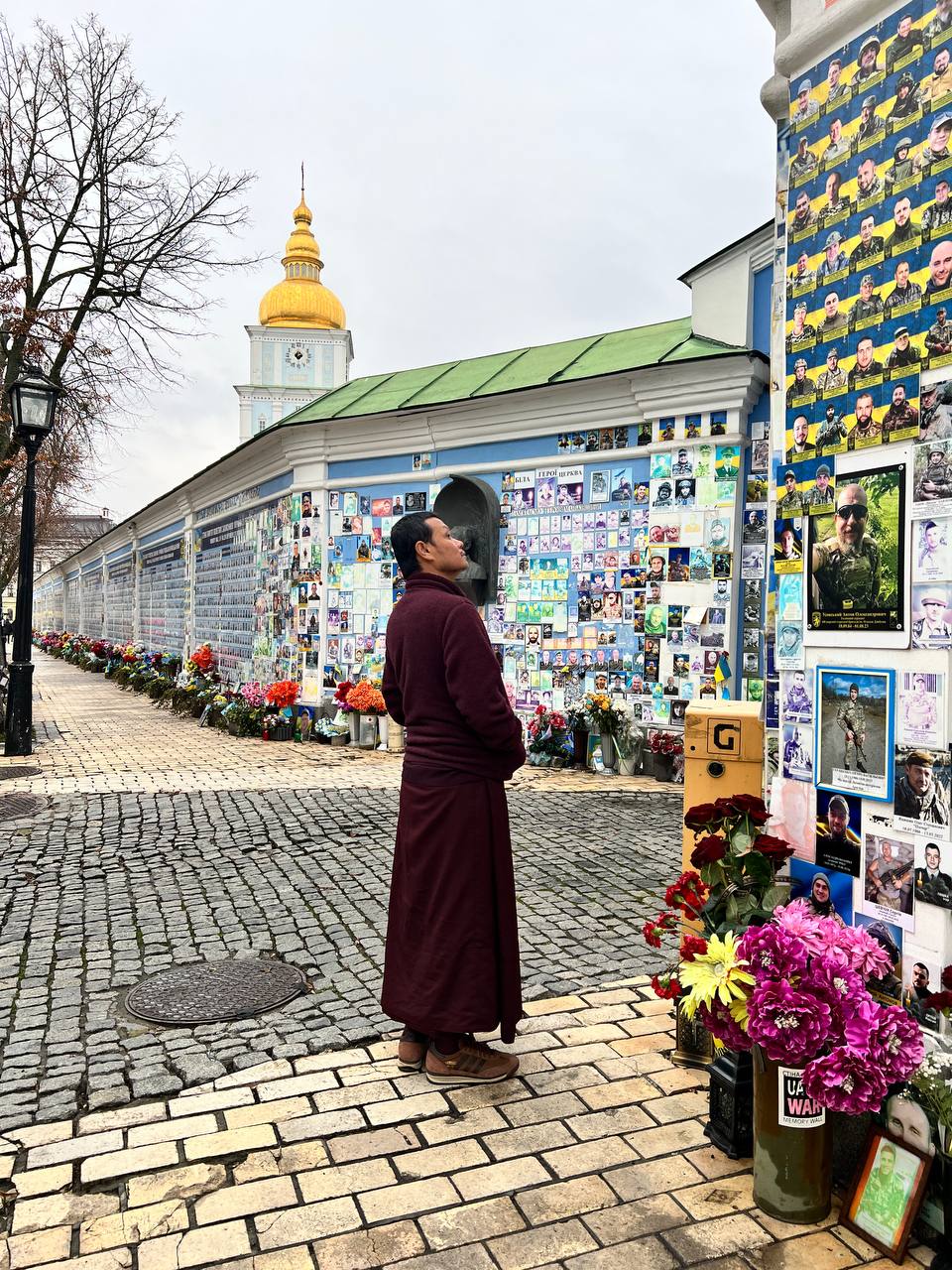
“The Four Mind Changing” can sound like introductory Dharma, yet their relevance never fades. Lama Gendun Yongdu’s visit to Ukraine on December 12 to 18, and the shared practice and teachings, made that unmistakably clear.
The first thought is the preciousness of human birth. Not because life is easy, but because conditions can still align for awakening: access to the path, a moment of inner space, the ability to choose even one wholesome step. In the middle of russia’s war against Ukraine, that recognition is not abstract. It is a daily discipline.
The second thought is impermanence. “Everything passes” can feel like a cliché until we see how much we suffer from trying to lean on what cannot hold. If impermanence is not consciously practiced, it often returns as shock, grief, or numbness.
The third thought is cause and effect. It is easy to understand and hard to embody when fear and pain are intense. A practitioner’s task is not to deny the reality of harm, but to notice how quickly the mind asks for special permission for anger, hatred, or despair, and to return to clarity before those states become our home.
The fourth thought is the unsatisfactory nature of samsara. Not “everything is bad,” but the deeper recognition that no conditioned situation becomes a final refuge. Even on good days, the mind can keep searching for threats, flaws, or something better. Seeing this clearly is what turns the mind toward what is reliable.
The photos show moments from Lama Gendun Yongdu’s meetings and events in Ukraine during his visit, December 12 to 18, 2025.
With deep gratitude to Lama Gendun Yongdu and to all our teachers, and with heartfelt thanks to the defenders of Ukraine, for making these sweet moments of sincere practice of the Buddha’s authentic Dharma possible.
